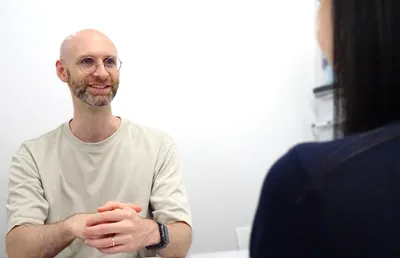
- Please introduce yourself:
- I am a British-born native speaker of English, and my job titles are co-producer and assets manager, though my day-to-day varies greatly from project to project. I originally trained as a conference interpreter and translator, and have worked in the animation industry for about seven years, the last four of which have been here at david production. In addition to the traditional production role of asset manager (overseeing and managing the production of model sheets), a reasonable portion of my time is spent communicating with and assisting foreign animators.
- What is your experience working with foreign animators?
- I've worked with animators who have a good working knowledge of both the industry and the Japanese language, and fledgling animators who only know a handful of Japanese phrases. I've found foreign animators to be extremely passionate about their work and, on the whole, reliable when it comes to meeting deadlines—a trait almost as important as artistic talent!
- What challenges do foreign animators face when entering the Japanese animation industry?
- The two big issues are—as you'd expect—linguistic and technical.
Japanese is a challenging language to learn, and is often the only language understood and spoken by the directors and other creative staff. Japanese is the default language for all meetings and production materials (storyboards, timesheets, direction notes, etc.), presenting an intimidating hurdle for foreign animators hoping to break into the industry.
Over the course of decades, the Japanese animation industry developed specific pipelines to facilitate production despite comparatively small budgets and restrictive deadlines. Key-animators need to understand where they sit in this pipeline and what materials they need to produce in order for those working downstream (clean-up and in-between artists, compositing team, etc.) to do their job efficiently. Part of this includes the writing and reading of timesheets and technical annotations. In the past, an aspiring animator would learn the technical nuts and bolts of Japanese animation while working in-house as an in-betweener; however, this isn't a realistic career path for foreign nationals based outside of Japan, meaning many foreign animators have to rely on self-study or on-the-job instruction after landing work as a key-animator. - With both a language and technical barrier to contend with, why work with foreign animators?
- On a personal level, I like animation and find it rewarding to help passionate people produce art. However, it can also be seen as an investment that benefits the industry as a whole. The industry is producing more and more titles per year, each studio drawing from the same well of animators. Investing time and effort into foreign animators helps us not only with our own titles, but contributes to the industry as a whole.
-
More Than Translation: Bridging the Production Process
- What assistance do you provide to foreign animators?
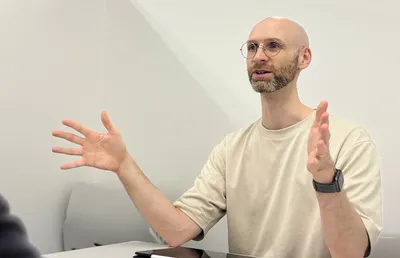
- Translation, for a start. Where necessary, we provide written translations of things like storyboards and director notes, in addition to providing live interpretation at meetings.
In the last few years, several English and Korean-speaking staff have joined our production team to ensure smooth communications with animators from around the world.
In some cases (when the budget and schedule allow it), we have also provided foreign animators with a mentor. The mentor—an industry veteran—provides feedback and corrections to the foreign animator's layouts before they are submitted to the episode director. Where directions from an episode director are brief and to the point ("Fix this," "Do that," etc.), the mentor instructs the foreign animator not just how to correct a shot, but why the corrections are needed. This helps the animator to grow, reducing the number of technical corrections required, long-term.
Even when we've been unable to provide a mentor, someone from our production team is normally happy to explain the logic behind a technical retake if it is not readily apparent. - Why hire multilingual staff instead of using machine translation?
- Machine translation definitely has its uses (especially for languages not spoken by our production staff); however, anime is a creative industry, and nuance, context, and specificity are key. Also, new animators often don't know what they don't know, so having experience in the industry and understanding the workflow helps us provide not just an accurate translation, but also the all-important background required to fully understand an assignment and the technical issues it might entail.
Beyond that, it's important to build a rapport with people you work with—animators included. Rather than just acting as a linguistic go-between, having actual conversations with someone in a mutual language makes them more likely to let you know if they are struggling and in need of some extra assistance, or whether a deadline is unrealistic and some adjustments might be required. - What is important for a foreign animator hoping to work with a Japanese studio?
- First and foremost is artistic ability; talented artists able to move characters through a three-dimensional space will always be in high demand. If you're hoping a studio will reach out to you (something studios do frequently), then some sort of media presence helps, for sure. For the many talented artists out there who don't want to rely on X's algorithm to help gain our notice, I recommend preparing a portfolio and contacting us directly. We occasionally receive inquiries from foreign animators through our homepage, and offer each application a well-considered, earnest response.
For the animators who aren't quite production-ready, I recommend learning what you can from the many free resources there are online. While we try and offer as much technical support as we can to those still learning, the more an animator knows about the nuances of the anime production pipeline (timesheets and annotations included), the easier it is for us to work with them.
Also, while polished, fully colored animation looks impressive, it's the key frames we will want to see, so make sure to include those in your portfolio! - Thank you. Any final words?
- Art is a universal language, so let your art do the talking-we can help with the rest!
If you are a foreign animator (or, for that matter, character and prop designers!) hoping to get into the Japanese industry, don't let language concerns hold you back. If it's the technical aspect that intimidates you, learn what you can online, and communicate with your episode production manager if you have a problem—nine times out of ten, they'll be happy to help you out.
With more and more foreign animators making a name for themselves in the industry, we are doing what we can to ensure that those with the talent and the willing are able to work in anime, regardless of their nationality or geographical location!